Keeping the Flame Alive
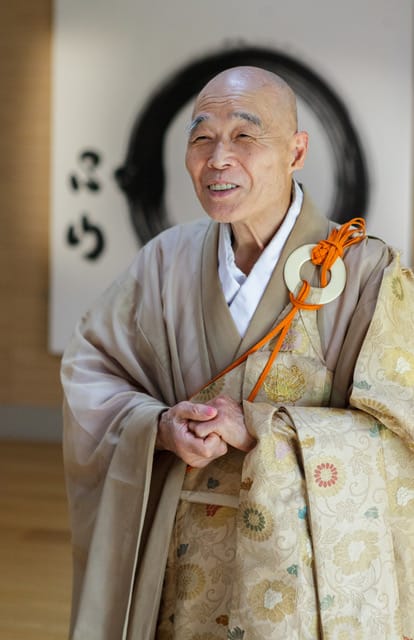
Next month (November) we’re marking the fifth anniversary of the death of our teacher, Zen Master Shinzan with a sesshin, an intensive Zen retreat. Events like this give us an opportunity not only to remember someone we loved and respected, but also to reflect on what they gave us, what they asked of us, and how we can carry their teaching forward into the future.
Shinzan Roshi sometimes spoke in rather gloomy, even doom-laden terms about the future of Zen in Japan. He had devoted his life to the practice and transmission of Zen, and he was deeply concerned about what he saw happening around him. The great tradition that had sustained generations of practitioners seemed, in some respects, to be losing its vitality.
There are reasons to share his concern. Across Japan, sōdō — the traditional training monasteries where monks undergo intensive Zen practice — have been struggling, and an increasing number have closed. The number of young people willing to commit themselves to intensive training has declined. Temples that once supported flourishing communities of practitioners face an uncertain future.
It is tempting to see all this as evidence of an irreversible decline. But the history of Zen tells a more complicated story.
Zen has never been a tradition that simply moved from strength to strength. Over the centuries it has experienced periods of extraordinary creativity and periods of stagnation, times of great public influence and times when the living spirit of practice was sustained by just a handful of dedicated people. Again and again, what seemed to be fading has found new life in unexpected places.
We can certainly hope for a revival of Zen in Japan. The Japanese tradition has given us an extraordinary inheritance, and its monasteries, temples, teachers and practitioners remain immensely precious. But I think Shinzan’s deepest concern was not ultimately with the survival of institutions.
His concern was with each one of us.
What does it mean to practise Zen sincerely? What does it mean to become a true person? How can we discover, in the actual circumstances of our own lives, the freedom, wisdom and compassion to which the Zen teachings point?
These were not abstract questions for Master Shinzan. They were questions to be answered through practice, through the way we sit, the way we work, the way we meet other people, and the way we respond to whatever life brings us.
He knew that the heart of Zen cannot be preserved simply by maintaining buildings, ceremonies or institutions, however valuable these may be. The living Dharma must be discovered afresh by each generation, and ultimately by each individual practitioner.
A monastery may close, but the Dharma does not close. A great teacher may die, but the possibility of awakening does not die with them.
In fact, this is one of the most wonderful things about our practice. We do not have to wait for more favourable circumstances. We do not have to live in a monastery, or in Japan, or in some imagined golden age of Zen. The opportunity is right here, in the life we are living now.
Whatever our circumstances — whether we are young or old, healthy or ill, living alone or surrounded by family, enjoying a period of happiness or struggling with difficulties — the essential question remains the same.
Can we meet this life wholeheartedly? Can we discover what it means to be truly ourselves?
Shinzan devoted his life to helping people answer these questions. He could be demanding, sometimes fierce, sometimes wonderfully humorous. But behind it all was an unwavering confidence in the possibility of awakening, and in the capacity of ordinary human beings to discover something extraordinary within their ordinary lives.
Five years after his death, I think the best way we can honour his memory is not simply to look backwards with gratitude, although gratitude is certainly appropriate. Nor is it to worry too much about the future of Zen, although we should do what we can to support its flourishing.
The best way to honour him is to practise.
To sit down on our cushions with sincerity. To bring awareness into the ordinary activities of the day. To meet other people with an open heart. To find the courage to let go of what we cling to, and to discover the freedom that is already available in this very moment.
If we do this, then Master Shinzan’s teaching is not something belonging to the past. It is alive, here and now.
And perhaps this is how Zen has always renewed itself: not primarily through grand plans or institutional reforms, but through the quiet determination of individual practitioners who discover for themselves what the Buddha discovered, and allow that discovery to transform their lives.
A single candle can light a thousand others without losing any of its own brightness.
The flame that Shinzan carried was passed to us. What happens to it now is in our hands. So many of our Zenways practitioners have worked so hard to make this year really special. The maturing of practice when people can stand up, take responsibility and make things happen shows that ignition is happening.
On this fifth anniversary year, I remember Master Shinzan with immense gratitude, affection and respect. And I would like to offer you the same encouragement that he offered so generously to those of us who practised with him.
Whatever your circumstances, please continue. Practise wholeheartedly. Discover what it means to be a true person.
I wish you the very greatest success in your practice.