Why these practices were never meant to be practised alone, and the place of accountability and a teacher
If you bring contemplative tools into your work, you have probably gathered a good number of them over the years: grounding, breath work, ways of settling attention. What is easy to gather along with them, and easy to lose, is the ground they originally grew in. This article is about that ground. For practitioners, it raises a question that is less about technique and more about accountability. Who holds us as we use these practices with others?
Mindfulness has travelled far…
Once embedded in rich philosophical, ethical and cultural traditions, it now appears in clinics, classrooms, corporate training sessions and mobile apps. It is taught as a method for reducing stress, improving focus and enhancing wellbeing. For many people, this is a genuine gift. Learning to pause, to breathe, to observe one’s experience with a little more space – these are not small things.
And yet something important can be lost in translation.
When mindfulness is separated from its roots, it risks becoming decontextualised – a technique without a compass, a tool without direction. The question is not whether mindfulness is helpful. Clearly, it can be. The question is: helpful for what, and guided by what?
The Missing Ground
From its inception with the Buddha, two and a half millennia ago, mindfulness was never taught in isolation. It was part of a wider path that includes ethical conduct, right intention and wisdom. Attention is not neutral – it is shaped by how we live, what we think and perceive, how we relate to others and what we value.
Ethics, in this context, is not primarily about rules or commandments. It’s about alignment. It is about cultivating a way of living that reduces harm and supports clarity. The Buddhist tradition teaches that when the mind is agitated by dishonesty, cruelty or greed, mindfulness cannot work. Conversely, when one lives with care, honesty and restraint, attention becomes naturally more stable and open.
This is why traditional teachings place ethics first. Not as a moral imposition, but as a practical necessity.
Remove this foundation, and mindfulness begins to float.
A Neutral Tool?
Modern presentations of mindfulness often emphasise its neutrality. Anyone can use it, it can be applied in any context, and it does not require belief.
This accessibility is part of its appeal (and success to some degree). But neutrality can be misleading.
If mindfulness is simply “paying attention to the present moment,” then it can, in principle, be used for almost anything. One can be mindful while working more efficiently, while pursuing personal success, even while engaging in harmful activities. Attention alone does not determine direction.
Without an ethical framework, mindfulness can become an instrument of whatever system it serves.
In a workplace, it may help employees manage stress without questioning the conditions that produce that stress. In a culture driven by consumption, it may become another form of self optimisation, another way to feel better, perform better, achieve more.
In this sense, mindfulness can be quietly co-opted.
Relational Practice
Another consequence of decontextualisation is the loss of relational depth.
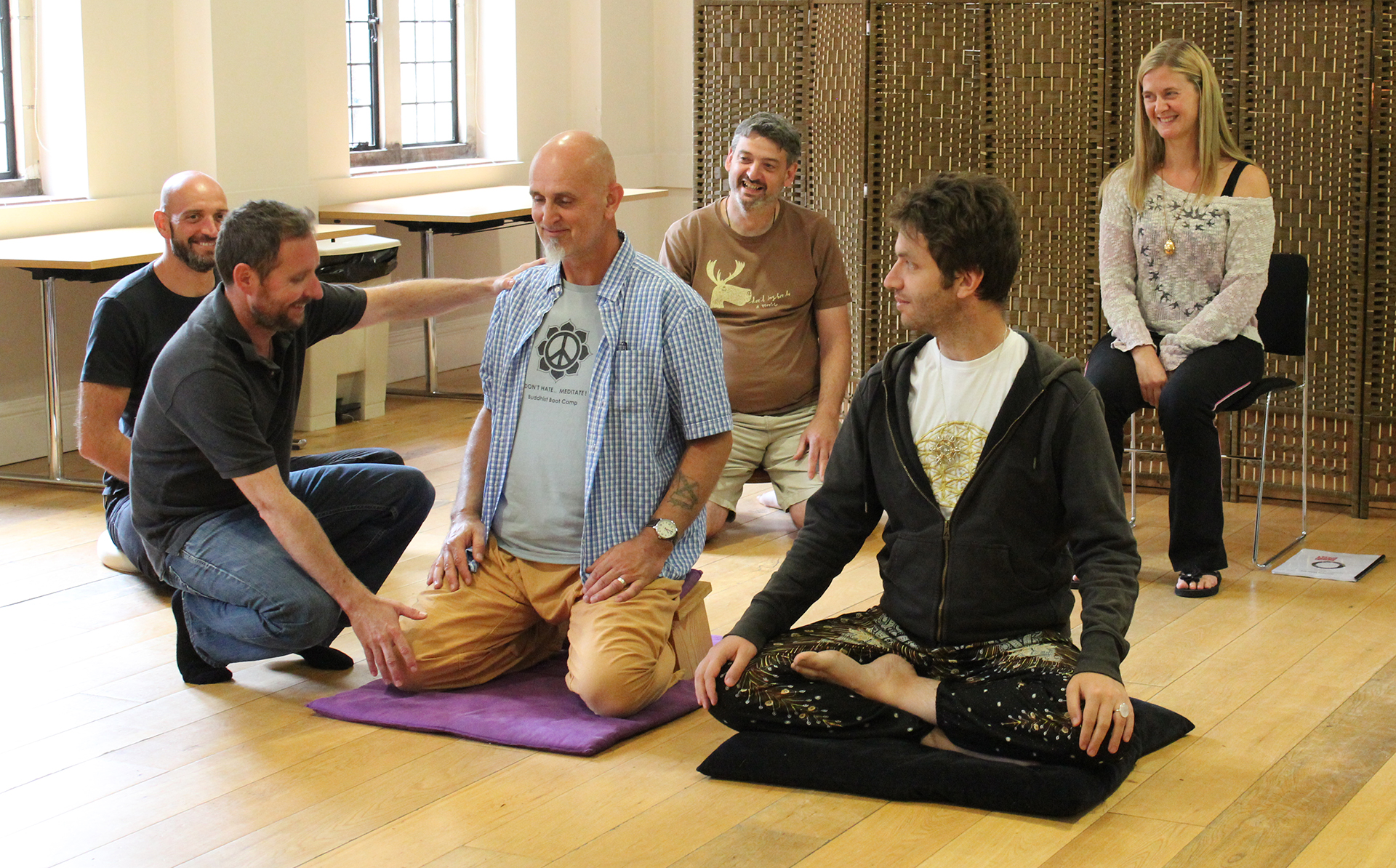
In traditional settings, practice is not only individual. It is embedded in relationships: with teachers, fellow practitioners and a wider community. Ethical principles such as compassion, generosity, tolerance and patience are lived out in these relationships. They are not abstract ideals but ongoing practices.
When mindfulness is taught purely as an individual technique, this relational dimension can fade. The practitioner becomes a self managing unit, applying tools to regulate internal states.
But much of our suffering, and much of our growth, happens in relationship. Ethics projects mindfulness into this field. It asks: How do I speak? How do I listen? How do I act when others are involved?
Without this, mindfulness can become inward looking, subtly self-absorbed, ego-centric.
There is a version of this that professional life already understands. A coach works with a supervisor. A therapist has supervision. Good practice is rarely a solo activity; it is a held one. The practices Daizan teaches and we offer in Zenways come from traditions in which no one was meant to work alone. You stayed in relationship with a teacher and a community – not as a formality, but because it supported you and kept the practice honest and rooted in compassion. For a practitioner drawing on these tools, that is worth taking seriously. The grounding and the breath work can be learned in a weekend. The accountability that keeps them clean is a deeper and longer path of learning.
Reintegrating Ethics
So what would it mean to avoid a decontextualised practice?
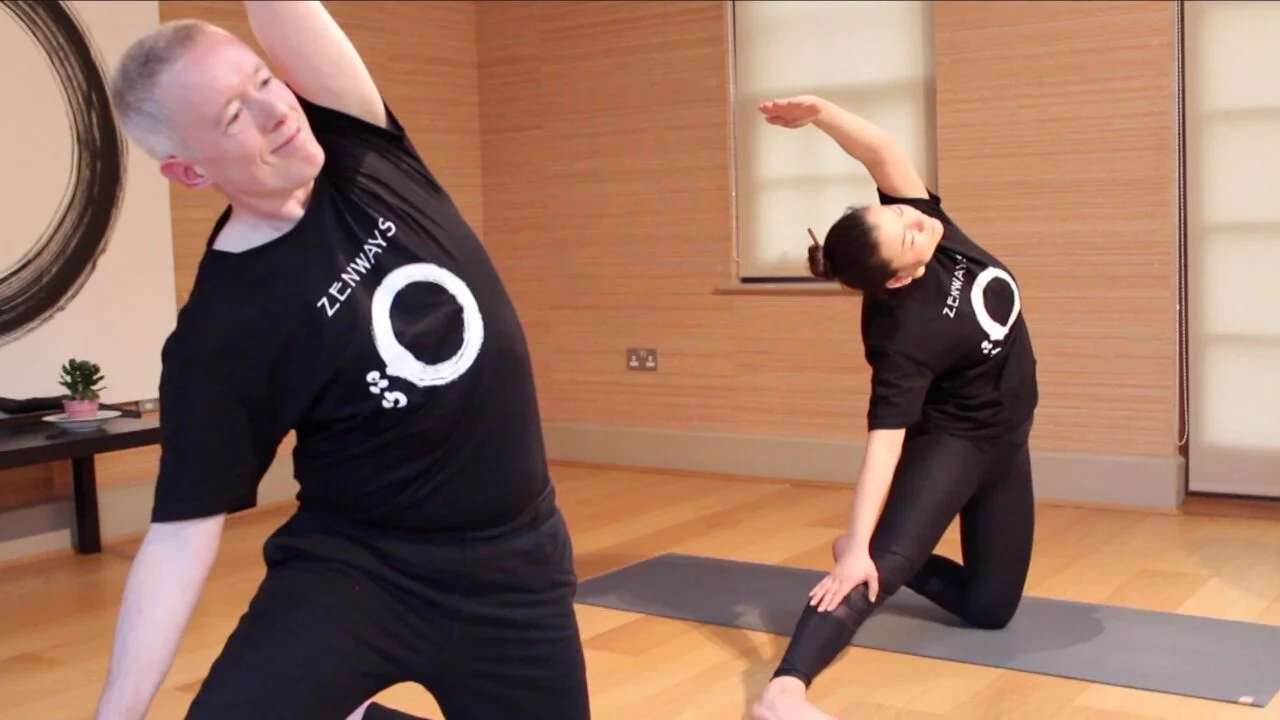
Here at Zenways we don’t require particular religious forms or formal commitments. Each teacher subscribes to our “Good Practice Guidelines”. These introduce a sense of direction and responsibility into practice.
A few simple questions can begin to reorient mindfulness:
- Does my practice and teaching support an alignment with my deepest intentions, beliefs and values?
- Am I becoming more sensitive to the impact of my actions on others?
- Is this awareness opening into compassion, or closing into self-concern?
- Am I using mindfulness to avoid difficulty, or to meet it more fully?
These are ethical questions, but they are also practical ones. They shape the quality of attention.
Ethics, we believe, is not an external addition to mindfulness. It is what allows mindfulness to deepen. It gives it weight, direction, and coherence.
For those of us who work with other people, these are not only personal questions. They are the ones that keep the work safe: am I sensitive to my impact, am I meeting difficulty or quietly avoiding it, is what I offer opening people toward compassion or narrowing them toward self concern? Questions like these are hard to hold entirely on your own. This is part of why a teacher, or a community of practice, matters – not to police you but to keep the questions alive.
A Living Practice
At Zenways we believe that mindfulness is only partly a technique we apply. It is also a way of being that permeates life. It naturally includes how we sit in silence, but also how we speak, how we work, how we respond to others, how we engage with the world.
To practice mindfulness without ethics is a bit like learning to steer a boat without knowing where you are going. You may become more skilful and more controlled, but the direction remains unclear.
When ethics is present (not as rigid rules, but as a living sensitivity) mindfulness becomes a path – not just toward calm, but toward clarity and insight; not just toward wellbeing, but toward wisdom and care.
In this way, mindfulness returns to its original depth: not just paying attention, but learning how to live.
This is one reason Zenways is built as a living community rather than a course you finish and leave. Alongside the training itself there is mentoring, ongoing practice and a teacher to stay accountable to, much as you might keep a supervisor for the rest of your professional work. It is part of what we call “The Embodied Mindfulness Way”, where what you offer others is held and kept honest by your own continued practice. If it speaks to you, our Mindfulness Pathway and our free online introductory sessions are an unpressured place to explore it further.