Returning yoga from performance to presence, through alignment, mindfulness and energetics
If you teach or practise yoga, you may have sensed this already – how a practice of inhabiting the body can slide into a performance of it. And if your work is with people’s inner worlds more broadly, this one still has something for you, because listening to your own body’s intelligence (or forgetting to) is a close cousin of the attunement (or not) you bring to another person.
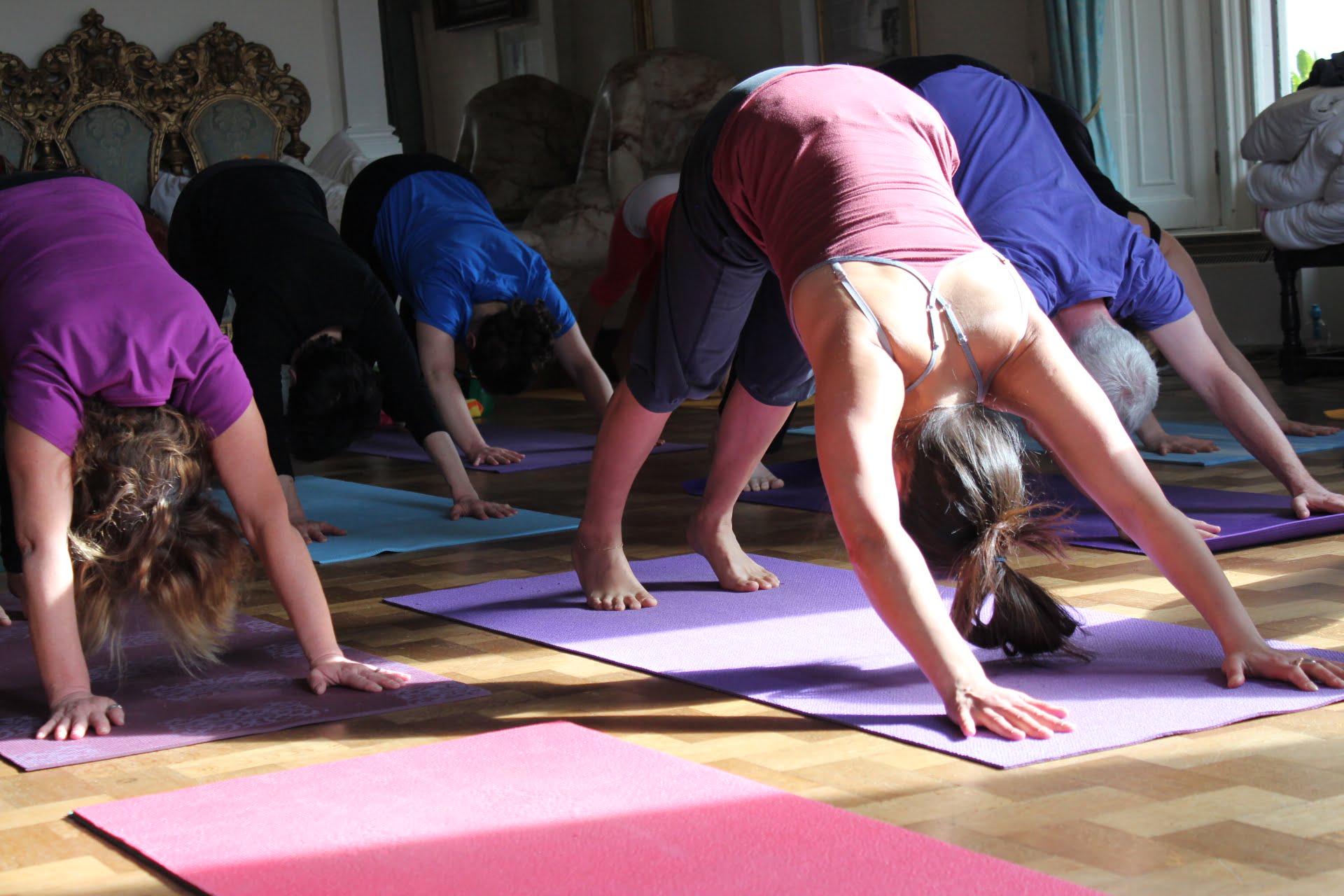
Walk into many yoga studios today and you may find something impressive. Strong bodies, complex postures, fluid sequences. Sweat, effort, intensity.
From the outside, it looks like mastery – and yet, for many practitioners, something feels slightly off. A question arises: Is this really yoga?
From Practice to Performance
Yoga, in its original sense, was never primarily about physical accomplishment. The postures, the āsanas, were a support or preparation. They provided a way of stabilising the body so that deeper work of attention, insight and transformation could unfold. But in much of modern yoga culture, the emphasis has shifted.
The question is no longer “how do I inhabit this posture?” but “how far can I go?”.
Flexibility, strength and endurance have become the markers of progress. Classes become sequences. Sequences become workouts. And gradually, almost imperceptibly, yoga becomes something closer to gymnastics.
Of course, there is nothing inherently wrong with physical training. The body benefits, energy moves and people feel stronger. But when yoga becomes performance driven, something is inevitably lost. The body becomes an object to be shaped, pushed and improved rather than a field to be inhabited and enquired into.
The Loss of Listening
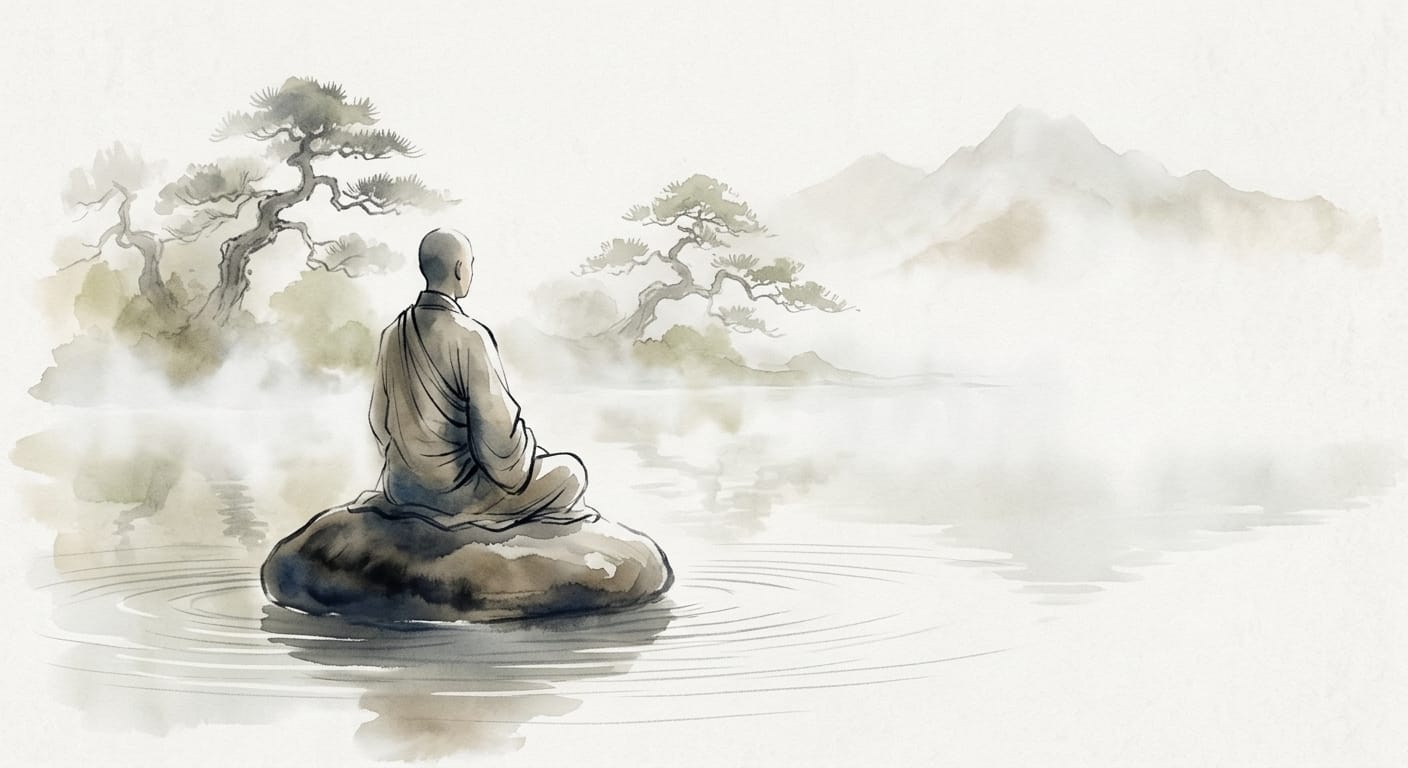
At the heart of Zen yoga is a quality of listening: listening to the breath, to the subtle signals of the body, the movements of energy, the thoughts and opinions, etc.
In a performance oriented approach, this listening is often overridden. The instruction comes from outside: “Go deeper,” “Hold longer,” “Push further.” And the practitioner follows.
But the body has its own intelligence. It knows when something is open or when something is forced. It knows when there is balance, and when there is strain.
When we stop listening, we lose contact with this intelligence. Practice becomes imposed rather than discovered. And this is where injury, physical and psychological, can start to appear.
This listening will be familiar to anyone who works closely with others. It is the same faculty by which you sense, without being told, that someone has tensed, or softened, or gone quiet in a particular way. Performance culture overrides that faculty on the mat, but it can be overridden just as easily in any work where we begin following the instruction from outside rather than the signal from within.
Zen Yoga: A Different Orientation
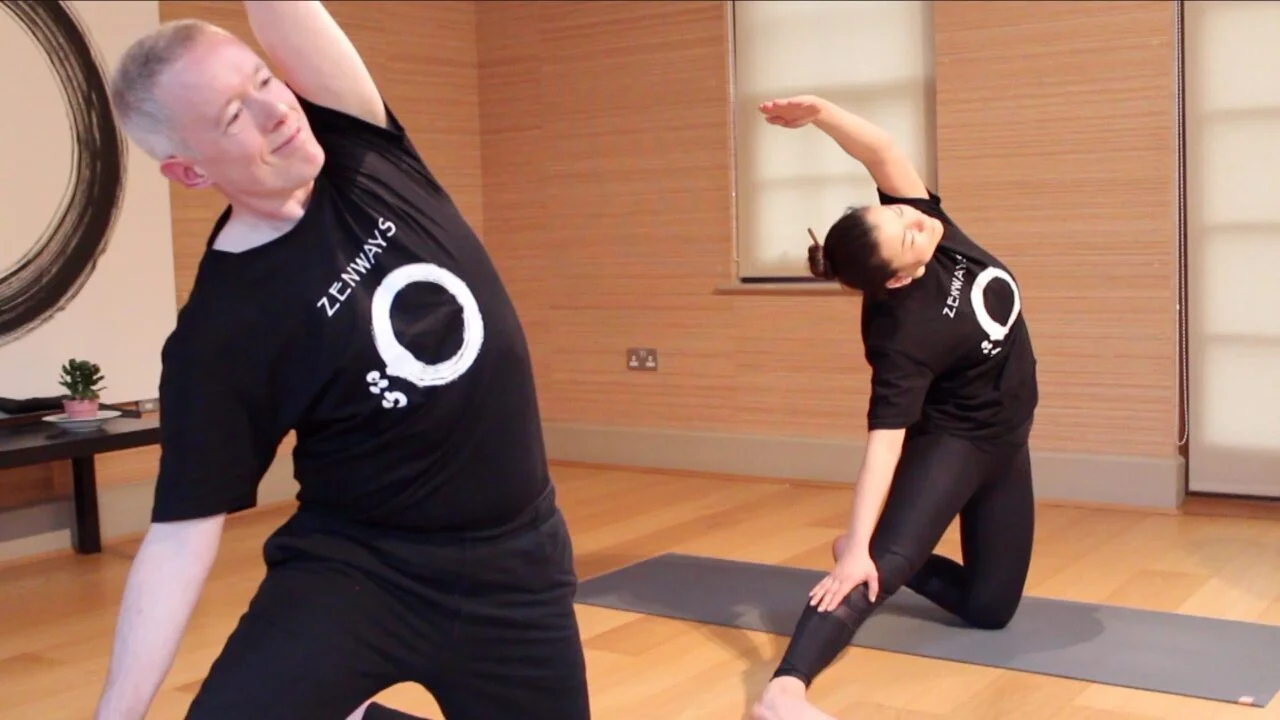
The yoga we practice at Zenways takes a very different approach.
It returns to three simple principles: alignment, mindfulness and energetics.
These are not techniques in the usual sense. They are ways of relating to the body and to experience.
Correct Alignment: Structure as Support
Alignment is often misunderstood as achieving a certain shape. In Zen yoga, alignment is not about appearance. It is about function.
- How is the weight distributed?
- How does the spine organise itself?
- Where is there unnecessary effort?
- Where is there collapse?
When alignment is correct, the body supports itself. There is less strain, less compensation and more stability. This allows something very important to happen: a reduction in effort. And when effort reduces, attention can deepen.
Alignment, in this sense, is not rigid. It is alive. It adjusts moment by moment, responding to breath and sensation. It is the difference between holding a posture and being held by it.
Mindfulness: Entering the Body
If modern mindfulness often drifts toward the head, modern yoga often drifts toward the surface. The yoga we teach in Zenways brings attention back into the depths, into the embodiment of the present moment – not as an idea or checklist, but as direct experience.
- What is happening in the feet?
- In the hips?
- In the spine?
- In the breath?
And more subtly:
- What is the quality of sensation? Is there ease? Resistance? Heat?
- Is there expansion or contraction?
- Is there agitation or calm? Concentration or spaciousness?
This is not analysis, it is awareness. The posture is no longer something you perform; it becomes something you inhabit.
And within that inhabiting, something begins to shift. The division between “me” and “my body” softens into just sensation, movement and presence.
Energetics: The Invisible Dimension
The third principle is often the most neglected in modern yoga: energetics.
Zen yoga (and actually all true yoga) understands the body not only as physical structure, but as a field of energy – a lifeforce moving, expanding, contracting, flowing.
In a purely physical approach, this dimension is largely ignored. But when we bring attention to this subtle layer, we start to discern feelings of flow, openness, blockage or release, aliveness and vitality.
In Zen yoga, postures are not ends in themselves. They are ways of working with this energetic field. A slight shift in alignment can change the entire energetic experience. A small softening can allow something to open. A careful attention to breath can transform a posture from effort into flow.
This is where yoga begins to move beyond exercise.
From Doing to Being
The deeper movement in Zen yoga is a shift from doing to being.
In a performance model, we are always doing something: stretching, strengthening, achieving. But the Zen approach allows something else to become possible. You are in the posture (or moving between postures) breathing and aware, and nothing extra is required.
From this, a different kind of intelligence emerges. The body begins to settle and organise itself, the breath finds its own rhythm, and energy moves where it needs to move. Practice becomes less about control and more about allowing.
That move from doing to being is the thread running through this whole set of articles, from applying a technique to inhabiting an experience. In yoga it means being in the posture rather than achieving it. When you’re working with others, it means being with them rather than working on them.
A Return to Simplicity
To say that modern yoga has moved towards goal orientated gymnastics is not a condemnation, but an observation. Something valuable has been gained: accessibility maybe, strength, diversity of forms. But something has also been obscured: the simplicity of being in the body, the depth of direct experience in the uniqueness of this moment, the integration of structure, awareness, and energy.
Zen yoga is not a rejection of modern practice. It is a remembering (mindfulness is a translation of the Sanskrit word smṛti, which literally means remembering). A return to:
- alignment that supports rather than impresses
- mindfulness that inhabits rather than observes
- energetics that connect rather than fragment
The Real Question
In the end, the question is not “how do I go further?” but “am I here?” – in this body, this breath, this moment.
If the answer is yes, even slightly, then yoga begins…
And from that practice of genuine enquiry, something profound begins to unfold. Perhaps it’s not visible from the outside, but unmistakably alive from within.
If working with the body this way draws you, our practice of Zen Yoga (we offer regular weekly classes online) sits within the same approach we call The Embodied Mindfulness Way, where what you offer others grows from what you have come to embody yourself. We also run yoga teacher training courses in this method. As with all of it, our Mindfulness Pathway pages and our free online training course introductory sessions are an unpressured place to begin exploring.