Why calm is a doorway and not the destination, and the steadiness that lies beyond it
If you use mindfulness in your work, there is a fair chance you first reached for it as a way to help people settle: to ease anxiety, to take the edge off stress, to bring a racing system back down. That is real, and it matters. And this article begins exactly there – but then asks a question that matters for anyone who spends time with other people’s difficulty. What happens when calm is no longer the goal?
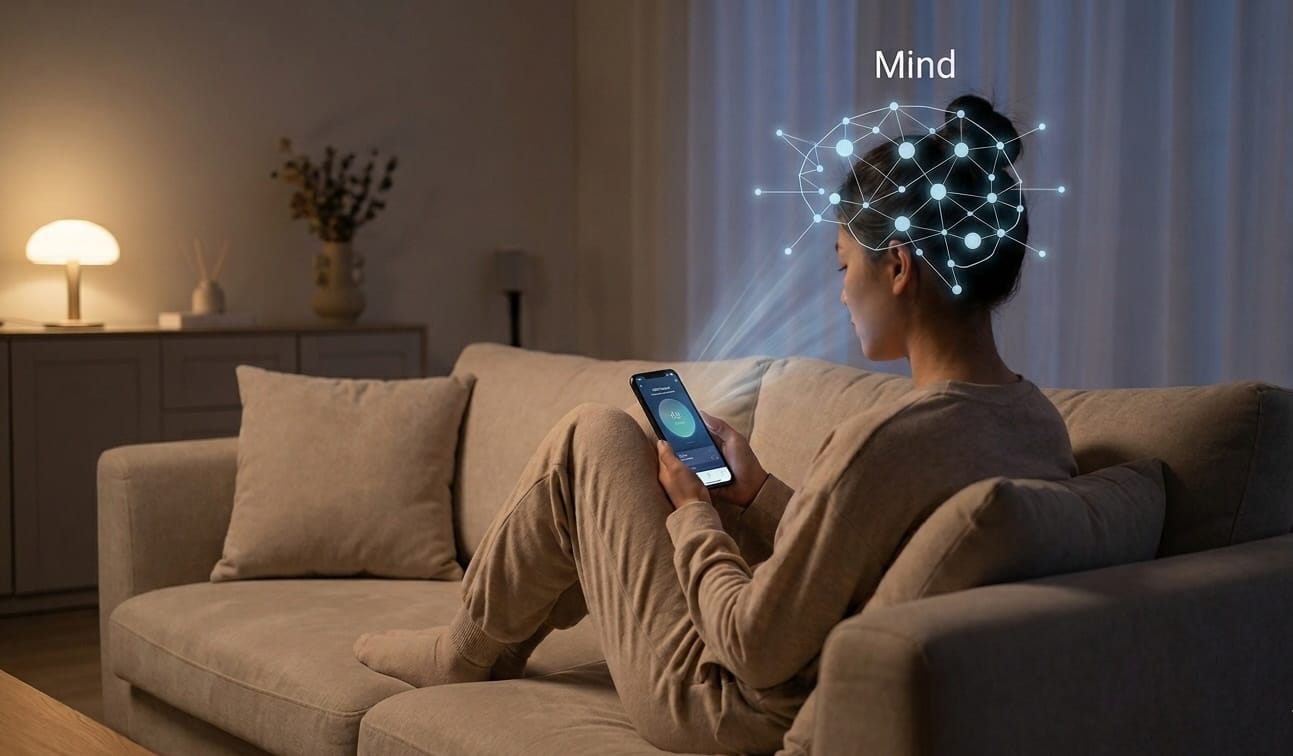
Mindfulness is often introduced as a way to relax: Sit comfortably, follow the breath, let the mind settle. Reduce stress.
For many people this is a welcome relief. In a fast, pressured world, the ability to pause and soften is valuable. There is nothing wrong with calm, in fact it is often the doorway into practice. But it is only a doorway.
When mindfulness becomes identified with relaxation, something essential is lost. The practice narrows. It becomes a tool for managing experience rather than a way of understanding it. And then we can fall into the trap of exchanging depth for comfort.
The Promise of Calm
Modern mindfulness is often framed in therapeutic language. It helps with anxiety, improves focus and supports emotional regulation. These claims are largely true and research supports them. People do feel better.
But embedded within this framing is an assumption: that the goal of mindfulness is to feel calmer, more balanced and more at ease.
This is understandable – calm feels good. It is measurable, it is teachable and it fits neatly into modern life. Yet from the perspective of the Zen tradition, calm is not the goal of mindfulness. It is a condition that may arise, but it is not the point.
If calm becomes the aim, practice subtly orients itself toward maintaining pleasant states and avoiding unpleasant ones. We begin to use mindfulness to smooth experience, to regulate it, to keep it within acceptable bounds.
In doing so, we remain within a familiar pattern: seeking what we like, avoiding what we do not.
This is precisely the movement that deeper practice invites us to see through.
What Is Missing
What is often absent in relaxation based mindfulness is a clear orientation toward clarity.
Clarity will not always feel calm. That’s because seeing impermanence directly can be unsettling, seeing the instability of the self can be disorienting, and seeing how deeply conditioned our reactions are can be uncomfortable.
However, these are not problems. They are part of the path.
When mindfulness is reduced to relaxation, these dimensions are rarely explored. The practice remains at the level of state management. It improves the surface of experience without questioning its structure.
One might feel calmer, but still fundamentally caught.
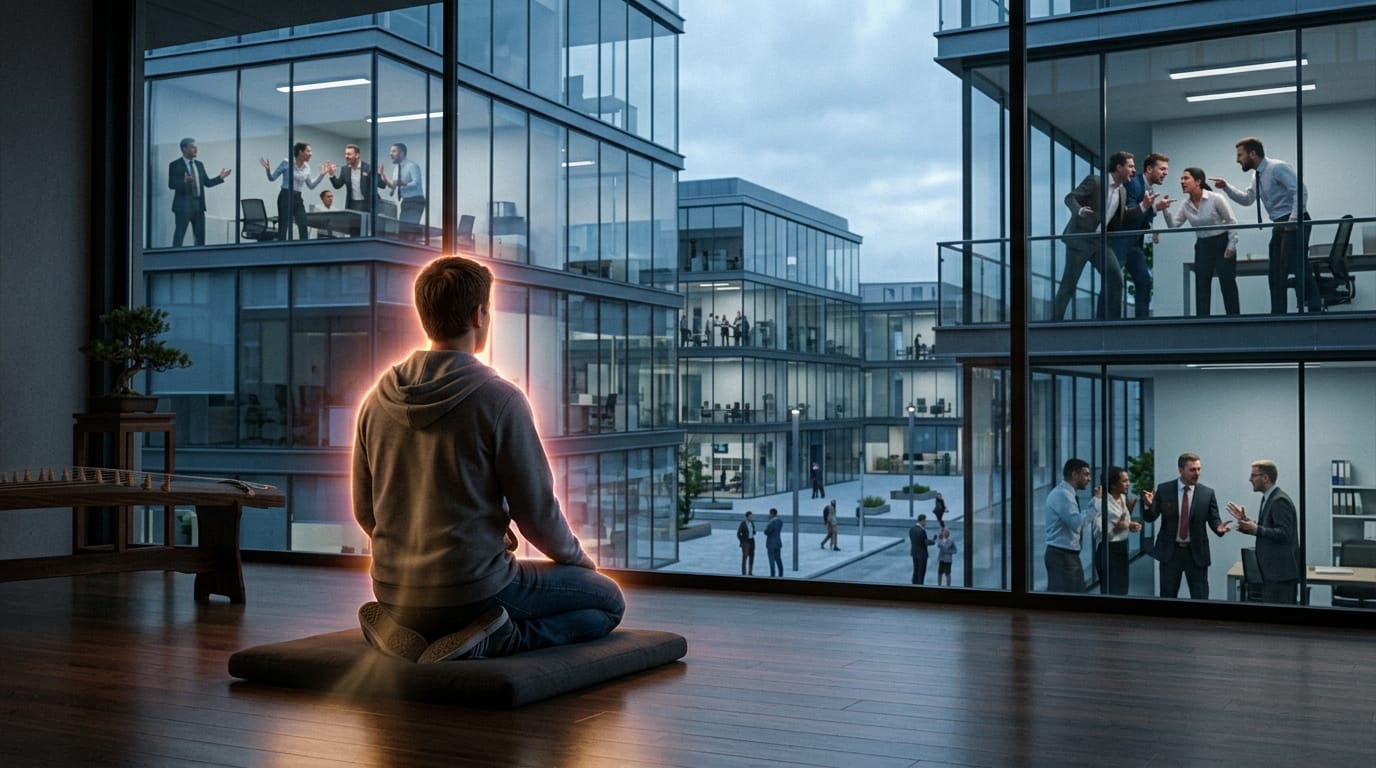
For a practitioner this is a live question rather than a philosophical one. A great deal of our training, understandably, points toward regulation: helping someone feel better and stay within a bearable range. We’re not against that, but trying to point past it. Some of what the people we work with carry will not simply be calmed, and perhaps should not be. The steadiness he describes is one that can stay with difficulty rather than smoothing it away, which is exactly what is needed in those moments.
Zen and the Question of Depth
Zen approaches mindfulness very differently. It does not begin with the question: How can I feel better?
It begins with a more radical question: What is this?
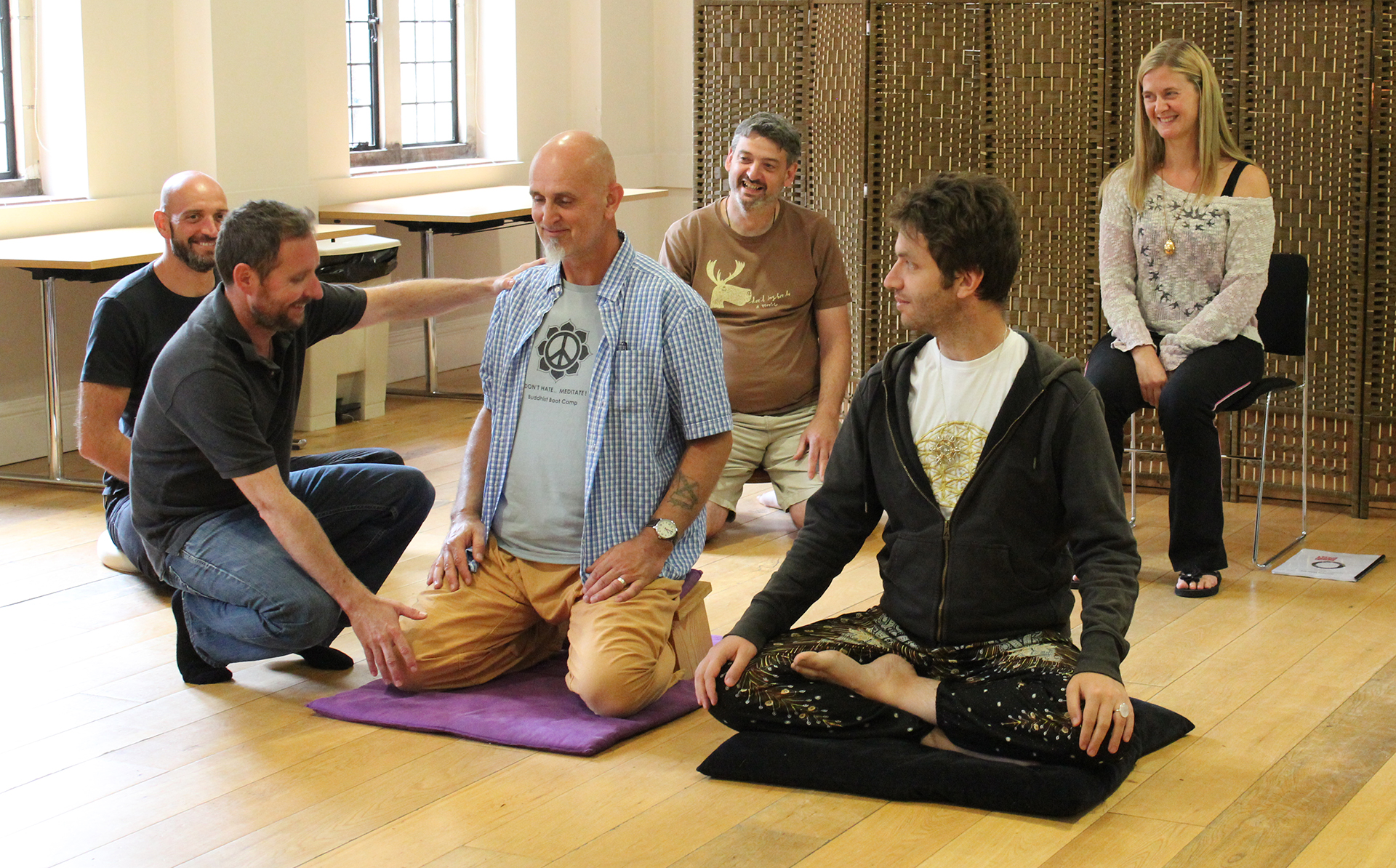
In Zen practice, particularly in zazen (seated meditation), there is no instruction to relax in order to achieve a certain state. There is simply the invitation to be present.
Calm may arise, or it may not. Agitation may arise, or it may not. Thoughts come, emotions come, sensations come, nothing is excluded or pushed away.
This is a very different orientation. It does not privilege calm over disturbance or aim at a specific experience. Instead, it opens a space in which experience can be seen clearly, whatever its nature.
Stability Without Control
Paradoxically, Zen practice often leads to a deeper, more stable calm, but not because calm is pursued.
The stability arises from non interference.
When we stop trying to manage experience, stop trying to make it calm or pleasant, something begins to settle naturally. The system finds its own balance.
This is different from relaxation. Relaxation is something we do, but this stability is something that emerges. And because it is not dependent on conditions being pleasant, it is more resilient. It can include difficulty, discomfort and change, or impermanence.
It is a calm that does not exclude.
This distinction, between relaxation as something we do and stability as something that emerges, is worth sitting with. It is the difference between a technique you apply to a client and a groundedness you bring into the room. A practitioner who has found that non interfering stability in themselves can keep a session steady without needing the other person to be calm first. It is a more resilient place to work from, because it does not depend on things being pleasant.
Beyond Calm
To go beyond relaxation based mindfulness is not to reject calm. It is to place it in its proper context.
Calm is welcome, but so is restlessness and confusion, and so is clarity. All of it is part of practice. The question is not “am I calm?” but “am I present?”
And even this question, eventually, falls away. What remains is simply sitting, breathing, being.
A More Complete Path
Modern mindfulness has opened a door for many people. It has made contemplative practice accessible in ways that were not possible before. This is something to be appreciated. But if we stop at relaxation, we stop early.
Our approach in Zenways offers a way to continue, not by adding complexity, but by removing the emphasis on a limited outcome, and by letting go of the need to feel a certain way. Trusting that awareness, when allowed to function freely, reveals something deeper than calm.
It reveals the nature of experience itself.
Just This
In the end, the difference is simple. Relaxation based mindfulness asks “how can I feel better?” Zen asks “Who am I?”.
And in sitting with that question, not answering it, not resolving it but living it, practice moves beyond calm. Not into something dramatic or extraordinary, but into something very simple and immediate.
Just this.
None of this dismisses the calm you help people find; it places it where it belongs, as a doorway rather than a destination. The steadiness beyond it is not a technique to add on but something that grows in your own practice over time. This is part of what we at Zenways call “The Embodied Mindfulness Way”. If it speaks to you, our Mindfulness Pathway and our free online introductory sessions are an unpressured place to explore it further.